2017年3月18日星期六

10 Symptoms of Thyroid Disease

10 Symptoms of Thyroid Disease

Thyroid disease has grown dramatically over the past decade, with an astounding 30 million patients suffering from some form of thyroid disorder. The amount of children within the last year that have been diagnosed with thyroid disease has grown dramatically. Mostly, it’s goiters as the culprit for numerous pediatric cases, but women are also being diagnosed earlier and earlier than ever before. Contrary to what people assume, men can suffer from thyroid issues just as women do, but women appear to develop the disorders more often than the male population.
Thyroid problems can lead to weight issues, emotional stress, anxiety, and terrible fatigue. It can also be easily confused with lots of other health issues such as chronic fatigue syndrome, and even Lyme disease. It is crucial to get your thyroid complications diagnosed and get on a treatment plan to avoid long term symptoms.
Here are the 10 symptoms of thyroid disease to look out for:

1. Weight Gain

The most common issue thyroid patients have is controlling their weight. Female patients have a tremendous struggle balancing a healthy weight often due to an under active thyroid.
The good news is that once your doctor comes to the thyroid diagnosis as the cause of your weight gain, you can better manage your eating habits.

2. Fast Heart Rate

Anytime you suffer from a speeding heart rate it can be alarming. You want to relax and bring it back down to a normal pace, but often it is out of your hands due to the thyroid not functioning properly.
Heart palpitations and a speeding heart rate can often be symptomatic of thyroid issues. The cardiac changes can come and go, or linger around for a few hours. This doesn't usually equate having any pain in the heart area, but it can be a symptom that unfortunately lasts for weeks or months for those living with an advanced case of thyroid disease.

3. Difficulty Concentrating

It's amazing how much havoc the thyroid can cause on your body. For instance, if you don't have enough hormones, it can result in troubles concentrating during the day. Your entire thought process can be thrown totally out of wack.
If you find that you could once breeze through your workload at the office and now it seems exhausting, it is definitely something worth checking into with your medical provider. Brain fog or concentration issues can be from many health ailments, but it certainly is related to your thyroid in many cases.

4. Increased Anxiety

The thyroid can change the way your body temperature is working, and physicians report that once the temperature is lowered, it can cause the patient to suffer from anxiety.
Anxiety treatments have come a very long way from decades ago. Now there are pills, therapy methods, or techniques such as yoga classes, or support groups to provide some level of relief for thyroid induced anxiety.

5. Skin Conditions

Skin conditions can come in the form of anything from acne episodes, to eczema, and they can all be more prone to developing for those that live with a thyroid issue.
A number of thyroid patients often report that their skin becomes very dry and itchy as a result of the thyroid not doing its job.
Over active and under active thyroids can both equally result in skin issues. Consult with your medical provider to see if you require specialty care by a dermatologist.

6. Bowel Problems

Did you know that your thyroid can sometimes cause you challenges in the bathroom? It's true, hypothyroidism commonly causes bowel problems in several patients.
The silver lining is that this symptom is generally easy to treat, even with over the counter remedies for most. Start drinking more water each day to encourage a healthy digestive system as a first step. Look into increasing fiber and leafy greens into your diet as well. Take a walk or ride a bike a few miles to keep your system moving and healthy.

7. Fatigue

Feeling tired, or sometimes even flat out exhausted can be symptomatic of thyroid issues.
Your hormones not working well play a large part in how much energy you have each day. Think of the middle aged men that receive testosterone injections; these injections help them with everything from their sex drive, to their energy levels. The same theory applies to women and their thyroid. When those hormones aren't properly balanced, a quick decline in their energy can commonly ensue.

8. Menstrual Cycle Changes

Again, the thyroid has a great way to throw a woman's hormones off kilter. If your thyroid isn't functioning as it should you can easily suffer from changes within your regular menstrual cycles.
Some women for instance don't get a monthly period if they suffer from an eating disorder. The same theory is applicable to those that suffer with thyroid complications, as the instant your internal system isn't functioning properly, it can quickly change your cycle.

9. Low Libido

Not feeling so affectionate with your significant other? Not too uncommon for those that have a thyroid issue.
While many women have various reasons for not feeling very sexually intrigued, some truly cannot help it if their thyroid is the culprit. Speak to your medical practitioner to see if your thyroid is to blame for your low libido.
There are also lots of herbal and over the counter options to increase your libido to start getting back to your old self.

10. Depression

It's really no wonder so many suffer from depression when tons of people are thyroid patients across the globe as the two go hand in hand.

Depression can be a very serious ailment, and not something that just causes a slump in a bad day and the next day you're fine. Hormonal imbalances quickly result in depression, sad thoughts, and weeks when you just can't get out of a funk. Speak to your doctor about possibly seeing a therapist or taking antidepressants to positively alter your mood changes.

2017年3月9日星期四

Colon Cancer Symptoms

Colon Cancer Symptoms

colon cancer, symptom of colon cancer

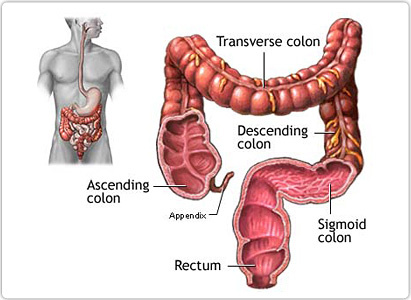
Colon cancer is a common malignant tumor of digestive tract system and has great threaten to our health. In early stage, colon cancer has no obvious symptoms or just has the symptoms before lesion cancerous change, while as time goes by, a series of symptoms and physical signs would appear.
(1) Abdominal pain and symptoms of digestive tracts: the vast majority of colon cancer patients have different degree of abdominal pain or abdominal discomforts, like abdominal hidden pain, left side abdominal distention, nausea, vomiting, loss of appetite and so on. After food feeding, the symptoms may get worse and sometimes may company with intervallic diarrhea or constipation, which are easily confused with the common diseases of right lower quadrant, like chronic appendicitis, ileocecal tuberculosis, ileocecal junction segmental enteritis or lymphoma. It is generally believed that the symptoms of rightward abdomen colon cancer manifest as pain in the part above navel; while symptoms of leftward abdomen colon cancer manifest as pain in the part under t navel. If cancer tumor penetrates intestine wall, it may cause local inflammatory adhesion or local abscess after the formation of chronic perforation. The location of pain is just the place where tumor localizes.
(2) Abdominal mass: it is usually irregular and in hard texture; its surfaces manifest nodosity; during early stage of transverse colon cancer and sigmoid colon cancer, abdomen mass has a certain activity and may cause pain even press it slightly.
(3) Changes of bowel movement and stool shape: this is due to ulcer or infection caused by tumor necrosis. Because toxin stimulates colon to change bowel evacuation habit: increase or reduce the numbers for bowel evacuation; alternate occurrence of diarrhea and constipation, or occurrence of abdominal colic before bowel evacuation and after that, it would alleviate. If the position of tumor is under or just localizes rectum, then some rectum irritation may appear, like anus bearing-down pain, difficult defecation. Dejecture often manifests as shapeless like pasty, and is mixed with mucus and bloody pus. Sometimes, large amount of blood content may mislead the diagnosis as dysentery, enteritis, bleeding of hemorrhoid and so on.
(4)Anaemia and absorption of chronic toxins: when the surface of tumor necrosis appears ulcer, the colon may suffer from continuously capillary hemorrhage. Blood being mixed with dejecture may fail to catch the attention of colon cancer patients. However, anaemia, emaciation, adynamia or weight loss may be caused due to chronic blood loss, toxin absorption or malnutrition. Advanced stage colon cancer patients may suffer from edema, hepatomegaly, ascites, hypoproteinemia, cachexia and so on. If tumor penetrates stomach or bladder or other organ and cause internal fistula, then similar symptoms shall be also caused.

Now you may have certain knowledge about the symptoms of colon cancer, if there is any further questions, welcome to Modern Cancer Hospital Guangzhou for consultation. Knowing well the symptoms of colon cancer is so helpful for detection and timely treatments, also the therapeutic effects can be remarkably improved and the survival time would be prolonged as well.

Bile duct cancer symptoms

Bile duct cancer symptoms

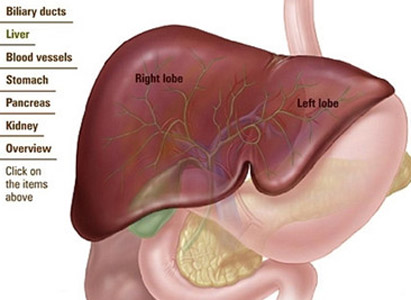
Bile duct carcinoma originates from extrahepatic bile duct and includes malignant tumor located from hepatic hilar region to the lower end of common bile duct. The incidence rate of bile duct cancer have increase trend in recent years, and even in some high risky area, the incidence rate has doubled. The malignancy of bile duct cancer is very high, and its main symptoms are jaundice, abdominal pain, itch of skin and other related symptoms.
bile duct cancer symptoms

1. Jaundice: as bile duct cancer patients have no obvious typical symptoms and most of them won’t go to hospital until jaundice appears; jaundice is the earliest and most important symptom of bile duct cancer, and it is said that 90-98% bile duct cancer patients have different degree of yellow dye to skin and sclera. Jaundice would get worse gradually without pain for most of the cases; in a few cases, jaundice manifests as undulant; jaundice for upper bile duct cancer would appear earlier than that of middle or lower bile duct cancer as there are buffering function of gall bladder.
2. Abdominal pain: nearly half of patients would suffer from abdominal distention or discomforts, weight loss, poor appetite, etc. These symptoms are usually regarded as early warning symptoms of bile duct cancer. According to clinical observation, 3 months later, bile duct patients would suffer from abdominal pain.
3. Itch of skin: itch may be caused after or prior to the occurrence of jaundice and is due to the increase of bilirubin content in blood and this stimulates the peripheral nerve of skin so that cause itches to skin. Sometimes there are some other accompanying symptoms like overspeed heartbeat, bleeding tendency, listlessness, acratia, abdominal distention, etc.

4. Other symptoms: besides the above mentioned symptoms, there are some other symptoms like nausea and vomiting, weight loss, deep yellow urine like soy sauce or strong tea, light yellow stool shaped like pot clay and so on; tumor may collapse in late stage, then bile duct bleeding shall be found and concealed blood test of stool or black stool is positive; this may even cause severe symptom like anaemia; patients with hepatic metastasis may suffer from liver enlargement, liver cirrhosis and so on.

Duodenal Cancer Symptoms

Duodenal Cancer Symptoms

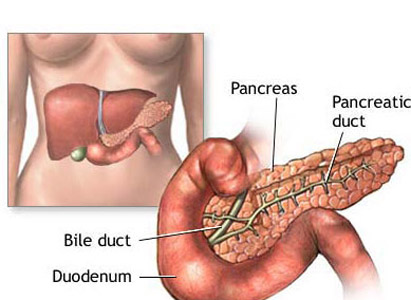
Duodenal cancer can be primary or secondary to malignant cancers of nearby organs, such as the stomach, bile duct and pancreas. Primary malignant cancer of duodenum is not common but should not be neglected. The most common duodenal cancer is adenocarcinoma, others like leiomyosarcoma, malignant lymphoma, carcinoid are also comparatively common types of duodenal cancer.
Duodenal Cancer Symptoms

Incidence of duodenal cancer

Duodenal cancer is not a common cancer. Its incidence accounts for less than 1% of all the malignant cancers in the whole body. Duodenal cancer has a comparatively high incidence in group between 50 to 70 years old, with a larger proportion among males than females.
What are the causes of duodenal cancer?
So far, causes of duodenal cancer still remain unknown. But substances in secretion of bile and pancreatic juice, for example, secondary bile acids like lithocholic acid, are likely the risk factors. Diseases, such as familial polyposis and benign epithelial tumors like villous adenoma, are likely related with duodenal cancer. Another study showed that duodenal ulcer, canceration of diverticulum and genetic factors also have certain relation with duodenal cancer.

What are the symptoms of duodenal cancer?

1. Pain: abdominal dull pain or discomfort, which is not relieved after eating and sometimes radiates to the back.
2. Loss of appetite, nausea, vomiting: these are non-specific gastrointestinal symptoms, which may occur in 30% - 40% of duodenal cancers. Symptoms like frequent vomiting and vomiting out abundant contents, are mainly the result of partial or complete duodenal obstruction caused by the enlarging tumor, which gradually blocks the intestinal cavity.
3. Anemia, bleeding: these are the most common symptoms. The bleedings mainly appear as chronic blood loss, such as fecal occult blood and black stools
4. Jaundice: Jaundice is caused by tumor’s blocking the ampulla. Such jaundice often becomes uneven due to tumor necrosis and shedding. It is usually reduced after fecal occult blood occurs. Moreover, it is often accompanied by abdominal pain
5. Loss of weight: Loss of weight is a common symptom. However, progressive weight loss often indicates bad treatment effect.
6. Abdominal mass: great enlargement of the tumor or invasion to surrounding tissues may cause palpable right upper abdominal mass to some patients.

Experts from Modern cancer Hospital Guangzhou remind that once symptoms of duodenal cancer occur, one should go to regular hospital for examination and treatment timely.

Soft Tissue Cancer Symptoms

Soft Tissue Cancer Symptoms

Soft tissue tumors are tumors that occur in mesenchymal tissue, including epidermal and dermal benign tumor, cystic lesion, and malignant tumor located in the deep fascia. Most of the soft tissue tumors are benign tumors; manifestations of benign and malignant tumors are similar. Whatever malignant tumors that happened in the soft tissue, in principle are called sarcoma.
Soft Tissue Tumor Symptoms

Causes of soft tissue tumor

Currently, causes of soft tissue tumor have not been defined yet, but it is well-known that soft tissue tumor is related to the following factors: 1. Gene (genetic) theory: gene mutations of normal cells can cause cancer. Tumor cells constantly proliferate and inherit the biological characteristics, such as hereditary multiple exostosis. 2. Chronic stimulation theory: (1) chemical chronic stimulation, (2) physical factors. 3 Virus theory has found that blood serum of patients with osteosarcoma contain specific antibodies of osteosarcoma. 4. canceration.

Symptoms of soft tissue tumor

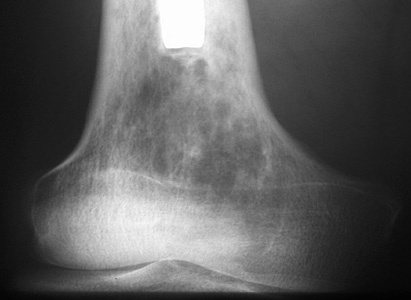
1. Systemic manifestation: both benign tumor patients and early malignant tumor patients rarely have obvious systemic symptoms. Late malignant tumor patients, such as bone sarcoma, rhabdomyosarcoma or metastatic carcinoma, can have cachexia symtoms, such as anaemia, emaciation, loss of appetite, weight loss, fever, etc.
2. Local manifestation: pain of bones, joints, soft tissue, osseous or soft tissue mass, dysfunction, these are common local manifestations of malignant bone tumors.
(1) Pain: pain is the most common symptom of tumors of rapid growth. At the beginning, the pain is light and intermittent, and gradually develops into a violent persistent pain. This is mainly due to tension or pressure imposed by bone tumor to sensitive periosteum or endosteum. But the pain does not necessarily explain the tumor is malignant, because some benign tumors, such as osteoid osteoma may cause pain due to reactive bone growth and pain. If pain suddenly and violently attacks, this may easily cause pathological fracture.
(2) Mass: benign tumors often present hard and non-tender lumps. Malignant tumors of rapid growth often present as a diffuse swelling, tenderness, skin fever, superficial venous engorgement.
(3) Dysfunction and compression: if tumor is close to joint, activities will be restricted; pain would increase when the joint moves. For tumors occurred in spinals, no matter benign or malignant, spinal cord compression would be caused and further lead to paralysis.
(4) Malformations: patients in growth age or patients with pathological fractures, may suffer from malformation, for instance, multiple osteochondroma would affect growth, and even cause limb bending with unequal lengths. Enchondroma can make bonelets of hand and foot deformed. If tumor invades into epiphyseal plate, then it would cause maldevelopment.

Experts of Modern Cancer Hospital Guangzhou remind: the above symptoms are common symptoms of soft tissue tumor, if similar circumstances occur, patients should go to standardized hospital a.s.a.p. for examination or treatment.

Multiple Myeloma Symptoms

Multiple Myeloma Symptoms

Multiple myeloma (MM) is a cancer of plasma cells from B lymphocytes. Multiple myeloma generally has no obvious symptoms in the early stage, so what are the symptoms of multiple myeloma?
Multiple Myeloma Symptoms

Symptoms

1. Bone pain: it is a main symptom. Bone pain most commonly involves the spine and vertebrae, and then ribs. It is manifested as intermittent pain in the beginning, gradually becomes persistent pain, and worsens with activity.
2. Infection: repeated infection is often caused, often occurring in the lung, urinary system, skin, sinus, etc. It is more common in the advanced stage or in the process that chemotherapy is undergone, manifests as intractable infection, not easy to be controlled with medication, so it often becomes the main cause of death.
3. Anemia: it results from the damage of hemopoietic system by infiltrating tumor cells and inhibition of normal red blood cell production. Almost all patients have different degree of anemia.
4. Renal dysfunction: it usually occurs in the early stage and about 20% of patients develop renal dysfunction, causing uremia which leads to death.
5. Immunoglobulin abnormality: a large number of monoclonal immunoglobulin makes the viscosity of blood increase, resulting in slowing of blood flow and microcirculation disorder. These kinds of patients will develop errhysis of capillary or bleeding, numbness of limbs, cerebral dysfunction, etc.
6. Neurological symptoms: when tumor infiltrates or compresses nerves, spinal cord and other parts, there will be corresponding symptoms appearing, such as paralysis, urinary retention, neuropathic pain, numbness of limbs and movement disorders, etc.
7. Other symptoms: such as high calcium deficiency, hepatosplenomegaly (enlargement of liver and spleen), amyloidosis (AL), a few patients with cryoglobulinemia will develop secondary Reynaud’s phenomenon.

Experts from Modern Cancer Hospital Guangzhou remind you: if found suspected symptoms of multiple myeloma, you should go to hospital for examination and treatment immediately.

Gallbladder Cancer Symptoms

Gallbladder Cancer Symptoms

Early symptoms of Gallbladder cancer

Normally gallbladder cancer comes without special clinical symptoms or only develops the symptoms of chronic cholecystitis. The early diagnosis of it is hard that once constant pain, lump, jaundice occur, a patient is already in late stages.
Therefore, the patients, especially the ones older than 50 and have the history of cholecystolithiasis, inflammation or polyp, complain of discomfort or pain in gallbladder should regularly have ultrasound examination for early and firm diagnose.
Gallbladder Cancer Symptoms

Symptoms of gallbladder cancer

1. Symptoms of enteron. Most patients (about 90%) develop dyspepsia, aversion to greasy food, belching, poor appetite and other symptoms because of functional defect of gallbladder, which means the patients cannot digest fatty material.
2. Pain in right upper abdomen. Over 80% gallbladder cancer patients are suffering from cholecystolithiasis at the same time that some similar symptoms of cholecystolithiasis or cholecystitis develop. Most cases would present the pain in right upper abdomen first, which would develop to constant vague or dull pain and occasionally accompanied by the paroxysmal acute pain that can extend to right shoulder.
3. Lump in right upper abdomen. About 50% patients develop the lump in right upper abdomen or upper abdominal regions, among them mostly are enlarged gallbladder.
4. Jaundice and skin itch normally appear in late stage of gallbladder cancer. Obstruction of bile duct resulted by cancer tissues encroaching on bile ducts or swelling metastatic lymph nodes depressing on bile ducts that the bile secreted by liver cannot enter intestines but flows black to blood would lead to yellow satin in skin and mucous membrane. And a patient with jaundice is normally accompanied by the skin itch that is hard to relieve and may aggravates at night.
5. Fever and emaciation. Around 25% patients would present fever, which causes from secondary infection of biliary tract. Cachexia may even develop in late stage patients as well.

Physical signs of gallbladder cancer

1. Jaundice
It appears as yellow stain in mucous membrane and skin severely and mainly because of obstructive jaundice. And jaundice normally is a sign of advanced cancer stage.
2. Lump in right upper abdomen
Smooth and swelling gallbladder can be touched in right upper abdomen when it is movable and without accretion of tissues around. But if accretion of peripheral tissues occurs, normally several lumps, even swelling liver or the lumps of duodenum obstruction are palpable.

Specialists from Modern Cancer Hospital Guangzhou remind you that once above mentioned symptoms occur, please have examination in hospital as soon as possible.